Bangladesh Needs More Than AI Skills
Bangladesh needs institutions that can put technology and skilled people to work.
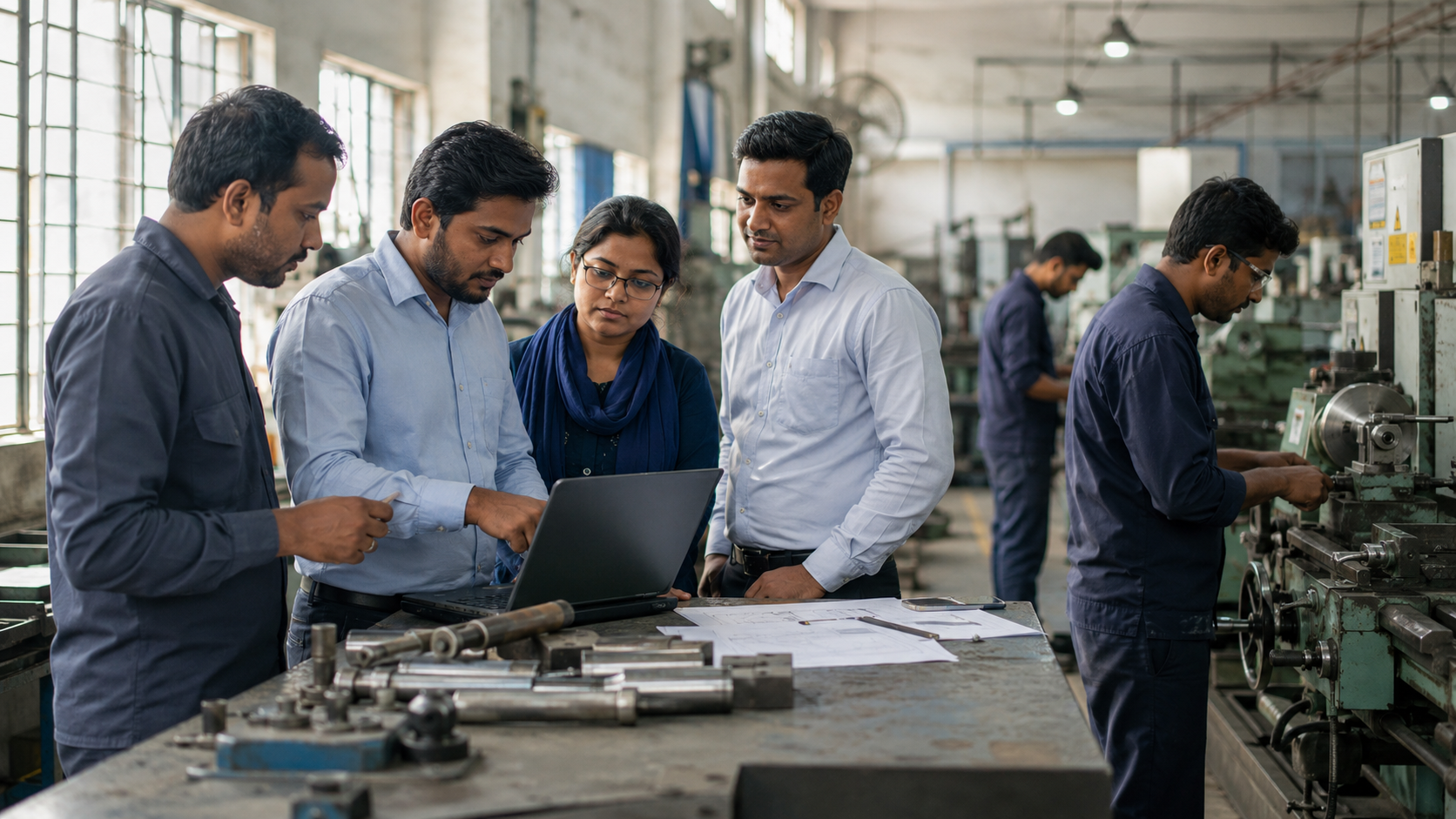
AI-generated editorial illustration.
Two articles in The Daily Star describe problems that have more in common than they first appear to.
The first reported on a roundtable about building Bangladesh's AI capability. Speakers called for education reform, AI skills, closer links between universities and industry, and support for local innovation. The second examined the country's brain drain, describing researchers who finance their own work, graduates who cannot use their training, and grassroots inventors who receive institutional attention only after becoming visible on social media.
Both point to a weakness in the institutions that should help capable people do useful work. Bangladesh needs people who understand AI and other emerging technologies. It also needs businesses, universities, and government agencies that can use their abilities productively. Training more people will achieve little if the organizations employing them cannot turn their work into results.
Give skilled people somewhere to work
Investing in AI skills makes sense. A more capable workforce can push companies and public institutions to modernize. New skills can help people start businesses, improve existing ones, and compete in global markets. Bangladesh risks falling further behind if it neglects education, technical competence, or digital infrastructure.
Employers need to develop alongside that workforce. Teaching thousands of young people data analysis, programming, or machine learning does not automatically create productive employment. An employer must have a problem worth solving and someone with the authority and management ability to put those skills to use. Otherwise, we will have more qualified people looking for work in organizations that have little use for their qualifications.
A technically strong graduate may join a company that recruits through connections, resists new ideas, or assigns skilled employees to routine administrative work. Researchers may have the knowledge to do useful work but lack dependable funding, equipment, and institutional support. An inventor may build something promising and still have no clear route to engineering assistance, intellectual-property protection, or commercialization.
Another training programme or certificate course will not resolve those difficulties. Training improves what an individual can do; the organization still has to make room for that capability.
When people repeatedly find that their abilities go unrecognized, unused, or unrewarded, underemployment becomes frustration. Leaving the country can begin to look like the only sensible career decision. Patriotic appeals will have limited effect while capable people struggle to find institutions where they can do work that justifies staying.
Businesses need help using technology
Public discussion increasingly uses "technology" and "AI" as though they mean the same thing. For many Bangladeshi businesses, the next productivity improvement may come from better machinery or preventive maintenance. Others need better production planning, quality control, inventory management, or industrial automation. A properly implemented accounting or customer-management system could make a substantial difference.
A factory that does not know its machine downtime, rejection rate, or actual production cost has basic work to do before attempting an AI transformation. A company may install an ERP system and continue running the business through disconnected spreadsheets. Buying the software has changed very little if people keep working as they did before.
In my own work in industrial services, access to technology is rarely the only constraint. Modern machinery, software, and control systems can usually be sourced. Selecting the right solution takes more work. So does installing it properly, maintaining it, training people to use it, and making someone responsible for the outcome.
That requires capable management. Someone has to define the problem and decide how the process should change. They must choose the technology, assign responsibility, make sure people use it, and check whether performance improves. Without that work, companies buy systems they do not use, machinery they do not maintain, and training they do not apply. They waste both the investment and the abilities of the people involved.
The World Bank Group's Bangladesh Country Private Sector Diagnostic, published in April 2025, identifies energy shortages, weak corporate governance, financing constraints, and an uncertain business environment as barriers to private investment and productivity. It also notes a substantial mismatch between graduate capabilities and employer demand. AI training alone cannot remove these barriers.
Choose AI for a specific problem
Bangladesh should invest selectively in AI. Local capability could be useful in Bangla language tools, speech recognition, and optical character recognition. There are also potential applications in agricultural advice, flood management, healthcare administration, industrial analysis, and public service delivery. The country needs the ability to evaluate imported AI systems for accuracy, bias, safety, and performance in local conditions.
Pursuing frontier models or expensive infrastructure simply because wealthier countries are doing so is harder to justify. Most near-term value will come from adapting existing technologies to specific Bangladeshi problems.
Start by identifying an important problem and improving the process and data behind it. Then choose the appropriate technology, train the people who will use it, and measure whether it improves the result.
Starting with "we must use AI" puts the choice of technology ahead of the problem. That can produce conferences, training targets, pilot projects, and technology centres whose success is judged by the activity they generate. We need to know whether the work actually improves anything.
Government must be able to act on the results
The roundtable also suggested that AI could improve government monitoring, transparency, and accountability. It may help identify irregularities, analyse projects, and reduce processing delays. Its usefulness will depend on the institutions acting on those findings.
Incomplete or manipulated records undermine the analysis. Officials who can ignore an automated warning without consequence have little reason to respond to it. Citizens affected by a digital decision need to be able to understand it, challenge it, and have errors corrected.
Government use of AI therefore requires reliable source data and clear responsibility for decisions. It also needs audit trails, privacy protection, human review, and effective appeal mechanisms. These safeguards must be in place for the technology to support accountability. Otherwise, automation may make poor processes harder to challenge and responsibility harder to locate.
Begin with firms that are ready to participate
A practical national strategy should address the conditions businesses need to use technology: reliable electricity, affordable connectivity, access to finance, predictable import rules, cybersecurity, and usable public data.
It should also help existing firms adopt proven technology. That includes machinery and production systems, quality control, energy efficiency, maintenance, financial systems, and digital management tools. Where public support is justified, it should depend on implementation and measurable productivity improvements. Purchasing equipment or completing training is too limited a measure of success.
Education policy should respond to this demand. Companies can help design courses, offer apprenticeships, and explain the practical capabilities they need. Universities should be judged partly by whether their graduates and research solve real problems, alongside enrolment, certificates, and publications. AI can serve selected needs within this wider effort to improve how organizations work.
Bangladesh could begin with one sector, such as light engineering, and a small group of firms willing to participate seriously. Measure their current productivity, machine downtime, defects, energy use, delivery times, and employee capabilities. Help them introduce suitable machinery, maintenance systems, quality controls, and digital management tools. Train employees on the technology being installed.
After twelve months, measure the results and publish what worked, what failed, and why. Successful methods could then be adapted for garments, agro-processing, pharmaceuticals, logistics, and other sectors.
This would give Bangladesh practical evidence of how technology, skilled people, and management can improve productivity. The country already has technology, ideas, and talented people. It needs more institutions that can make use of them. Until those opportunities exist at home, we will continue training people whose best prospects lie elsewhere.